Introduce Kubit
Kubit is an Agent Analytics platform that maps user behavior directly to your LLM traces. Standard tools tell you what broke, but Kubit tells you why the user was frustrated. Instead of bouncing between analytics dashboards and raw JSON to figure out why an agent failed, we feed that complete context straight into your coding agent via MCP. We give you the exact visibility and skills you need to debug, optimize, and solve it where you build it.
[Hero Image]
The Pain of Non-Deterministic AI
If you are building AI agents, you already know the context-switching nightmare. Standard observability tools tell you what broke (latency, token limits, system errors), but they can't tell you why the user was frustrated. To get the full picture, you have to manually stitch together clickstream data, prompt versions, and raw logs across six different tabs. It is slow, disjointed, and leaves you guessing.
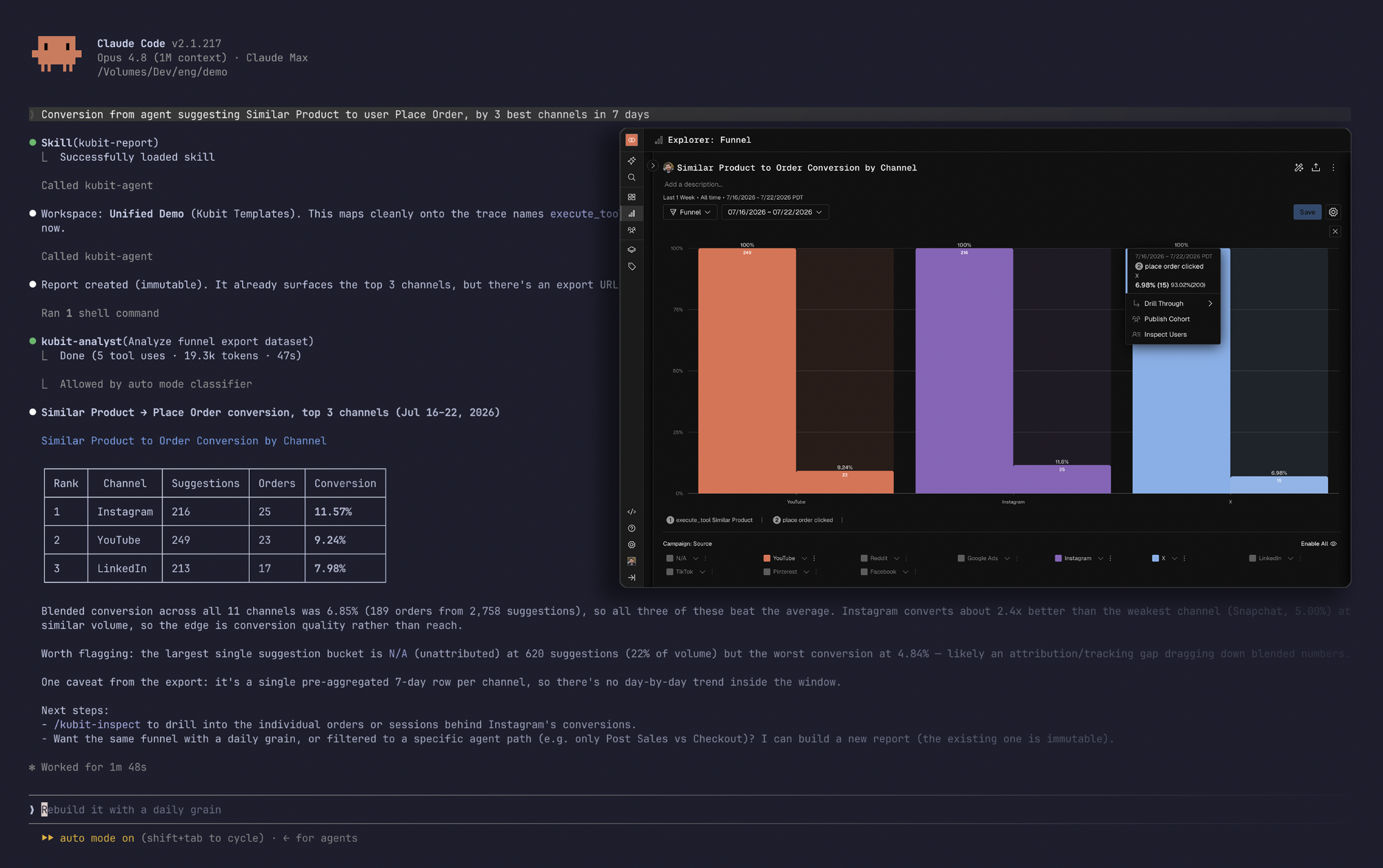
Kubit fixes this. We map how users behave directly to how your agents reason, feeding that context straight into Claude Code or Cursor via MCP. Instead of drowning in raw JSON traces, your coding agent instantly sees:
User intent and sentiment
Friction and delight signals
Exact tool call trajectories
User actions before and after agent interactions
We give you the exact context you need to debug and ship reliable AI, right where you code.
How Kubit Works: Connecting the Dots
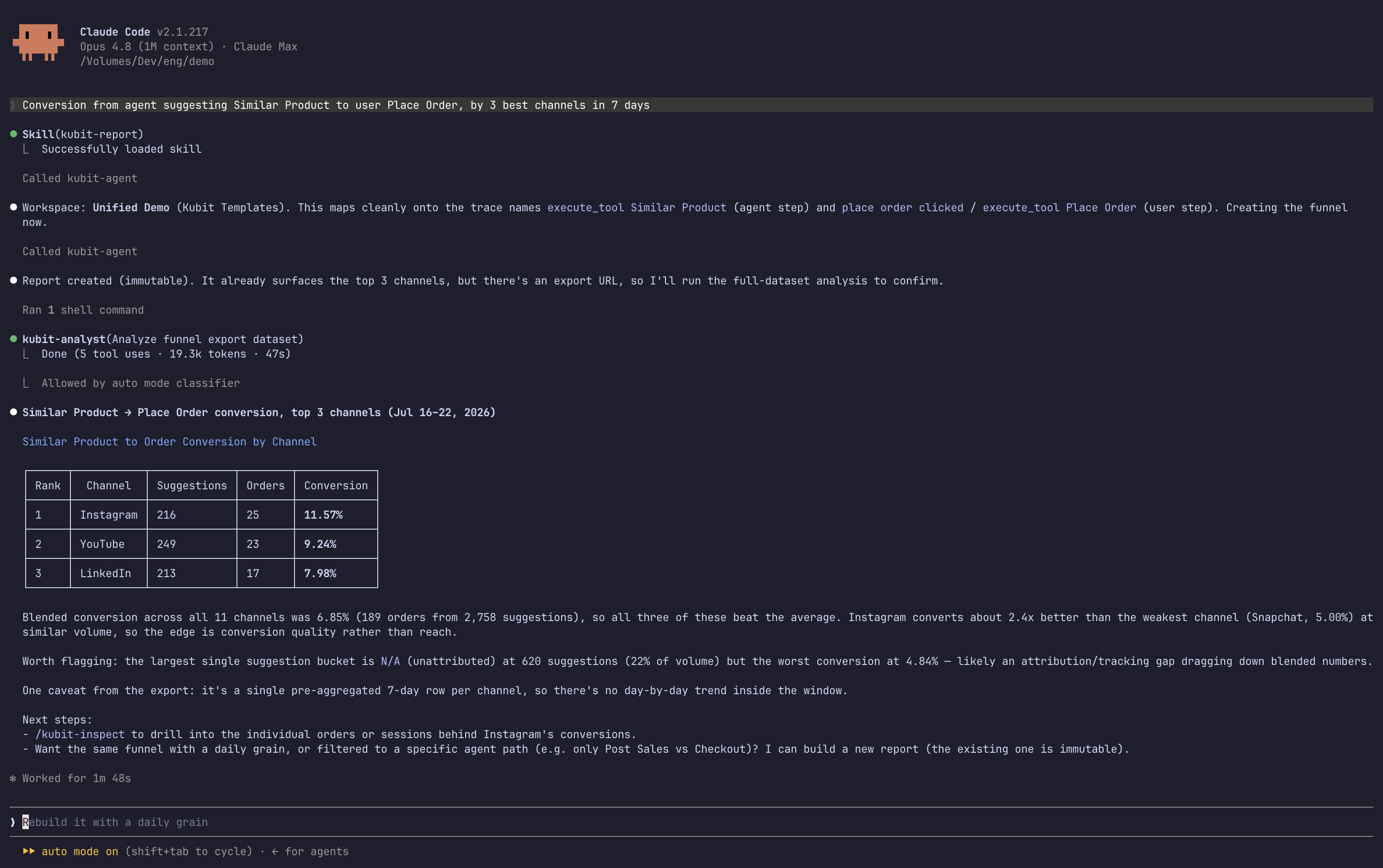
Kubit isn't just another dashboard. It is an end-to-end Agent Analytics platform that feeds actionable insights directly into your workflow so you can debug, optimize, and self-fix without leaving your editor.
Conversation Intelligence: Go beyond simple LLM observability. Extract intent, sentiment, and resolution directly from your traces to understand the root cause of user frustration—insights that normally stay buried deep within raw JSON logs.
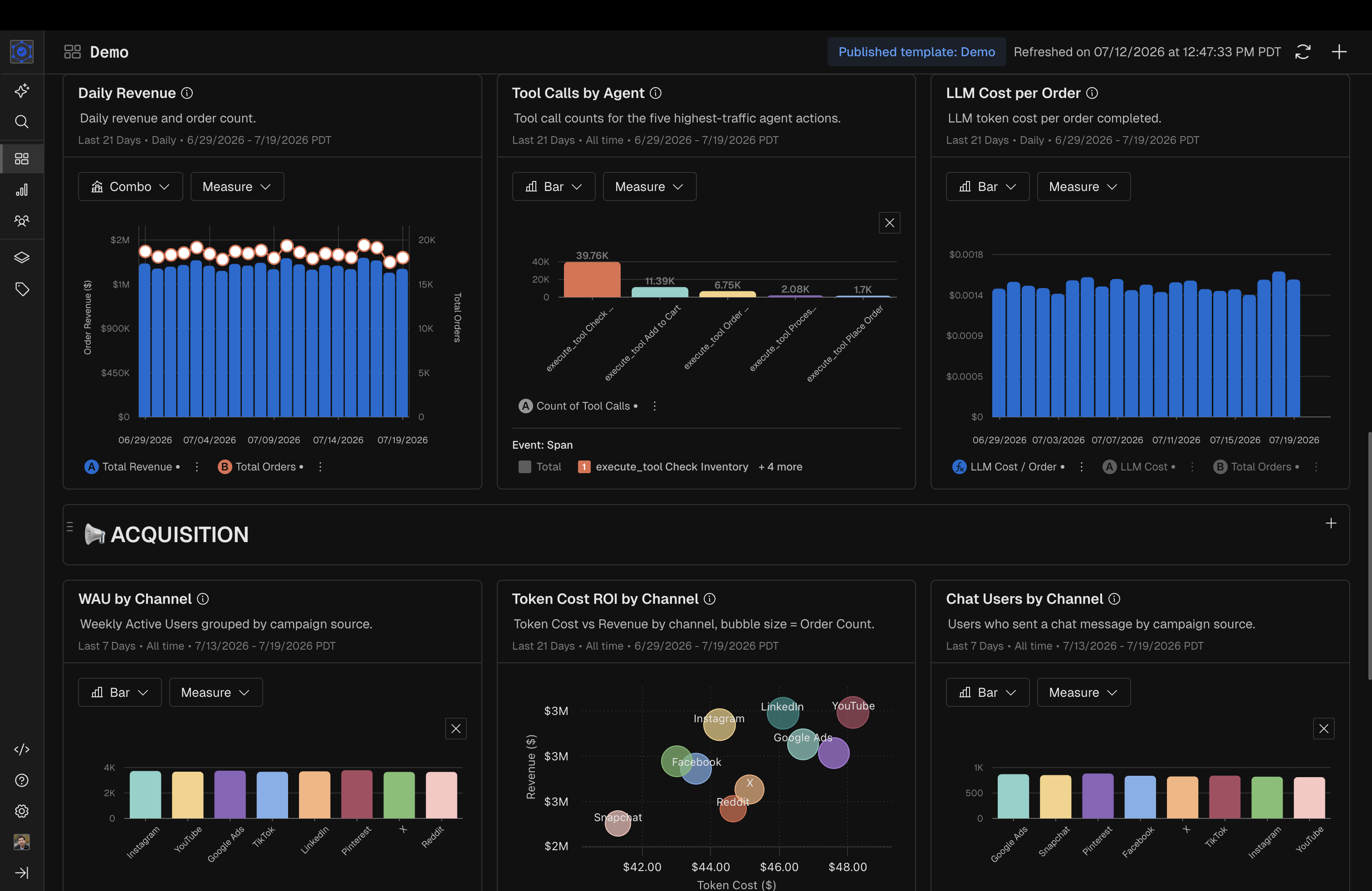
Total Visibility: Full context, all in one place. Correlate user behavior directly with your agent's reasoning chain. We stitch together clickstream events, LLM traces, tool calls, prompt versions, and user intent—so you can stop manually piecing the puzzle together across six different tools.
Actionable Context, Solve It Where You Build It: Turn unpredictable AI into a measurable product. Kubit feeds exact user intent and friction signals straight into Claude Code or Cursor via MCP, allowing your coding agents to trigger auto-fixes and optimize performance without ever opening a browser.
Features Built for the AI Product Engineer
Product Analytics for LLM Observability: Go beyond simple performance monitoring and error tracking. With Kubit, you get advanced, self-service analytics to discover patterns at scale. Track token costs and error rates by intent and friction signals, explore escalation funnels, and follow user retention by cohort before and after agent interactions.
Support for Langfuse, LangSmith, Arize, and OTel: Integrate seamlessly with all major LLM observability frameworks or instrument your AI application with OpenTelemetry from scratch. Kubit does the heavy lifting for you and automatically applies industry best practices.
Conversation Intelligence Without Limits: Understand the why behind your metrics by analyzing the intent and sentiment of users interacting with your agent. Unlike expensive LLM-as-a-Judge or BYOM approaches, Kubit efficiently enriches 100% of your traces with zero sampling.
Coding Agent Integration and Self-Healing: The magic happens right where you code. Embedded directly into Claude Code and Cursor via MCP, Kubit equips your coding agents with the live context and skills needed to debug and auto-fix without ever opening a browser tab.
About Us
Developing AI agents is incredibly hard. Debugging them shouldn't be.
Kubit Agent Analytics was born out of a shared frustration: while building our AI Analyst features, we were tired of drowning in raw JSON just to figure out why an agent failed. Standard observability tools told us what broke (latency, token limits, system errors), but they couldn't tell us why the user was frustrated. To get the full picture, we had to manually stitch together clickstream data, prompt versions, and raw logs across six different tabs.
It was a context-switching nightmare. So, we fixed it.
Our mission is to turn unpredictable generative AI into measurable, optimizable products. We map user intent directly to LLM reasoning chains and pipe that context straight into your coding agent via MCP. Leveraging our deep roots in product analytics and a uniquely flexible warehouse-native architecture, we are building the future of Agent Analytics.
Our Philosophy
Context is King: Raw LLM logs are useless without user intent, sentiment or behavior insights.
Action Over Observation: Finding an error isn't enough; you need the complete analytical insights and the tooling to take action.
Solve It Where You Build It: Kubit feeds exact user intent and behavioral context straight into Claude Code or Cursor via MCP, allowing your coding agents to deploy auto-fixes and optimize performance without you ever switching tabs.
The Road Ahead
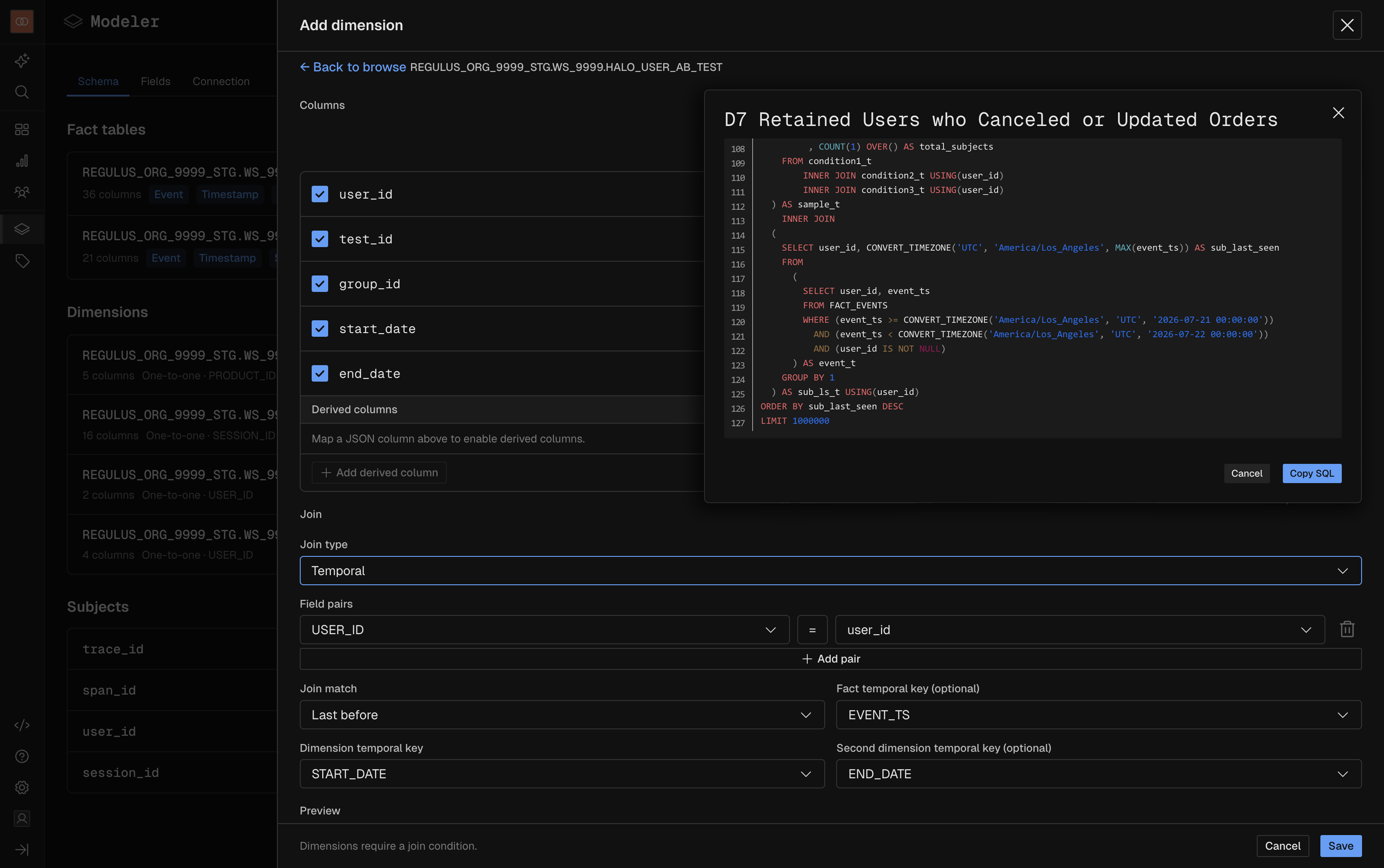
If you also collect clickstream events from your digital apps, Kubit offers warehouse-native option to unify Agent Analytics and Product Analytics. Not only will you get all your agent traces and clickstream events into your own cloud data warehouse as One Single Source of Truth, you will be able to conduct complex analytics to track your customers complete journey across your AI agents and web/mobile apps.
How much did the Shopping Agent contribute to the sales growth?
What are the top resolved intents linking to customer retention?
Start a push campaign to the churned customers caused by bad chatbot experiences.
Interested in learning more? Please contact us.
Next steps
Check out Kubit architecture
Typical workflow
FAQ